Bez kategorii

(11) Fraud, Article 286 of the Penal Code, from the series „35 Cybercrimes in Polish Penal Law”

What Does This Crime Involve?

Fraud is one of the most common crimes, which can occur in both traditional and digital forms. In Poland, fraud is regulated by Article 286 of the Penal Code, which details actions aimed at obtaining financial benefits by deceiving another person. In this article, we will take a closer look at this crime, its characteristics, and the penalty that the perpetrator faces.

What is Fraud?

Fraud, according to Article 286 of the Penal Code, is a crime that involves leading another person to dispose of their property (such as money or material goods) to their disadvantage, by deceiving them. Any actions aimed at gaining financial benefits through manipulation, document forgery, internet fraud, or other dishonest methods fall under the definition of fraud.

Fraud can take various forms, both offline (e.g., forging signatures, misleading business transactions) and online (e.g., data theft or identity theft on the internet).

Who is the Perpetrator of Fraud?

A fraud perpetrator can be anyone who acts with the aim of obtaining financial benefits by deceiving another person. This could be someone who manipulates facts, forges documents, or uses other dishonest techniques to commit fraud. The perpetrator of fraud is often motivated by the desire for quick profit, exploiting the victim’s weaknesses – whether through phishing or other online fraud schemes, such as the „Nigerian scam.”

What Are the Forms of Computer Fraud?

In the context of cybercrime, computer fraud can take different forms. The most common types include:

  • Phishing – the act of stealing confidential data (logins, passwords, personal information) through fake emails or websites.
  • Skimming – copying payment card data using special devices.
  • Online transaction forgery – for example, selling non-existent products on the internet or offering services that will never be provided.
  • Ransomware – software that demands a ransom in exchange for unlocking access to data.

Which Devices Can Be Used to Commit Fraud?

In the context of computer fraud, the perpetrator can use:

  • Computers and laptops
  • Smartphones, tablets
  • Internet networks and servers
  • Mobile applications and websites

All of these devices enable fraud to be committed, either by directly manipulating data or falsifying information to gain financial benefits.

What Penalty Does Fraud Carry?

For committing fraud, under Article 286 of the Penal Code, the penalty can range from 6 months to 8 years of imprisonment. In the case of internet fraud, the penalty may be even higher, especially if the victim is a large number of people or a business.

Additionally, the court may impose a duty on the perpetrator to compensate for the damage caused, which may include returning the defrauded funds as well as paying compensation to the victim.

Examples of Computer Fraud from Case Law

  1. Fake Investment Offers The perpetrator created a fake website offering „easy money” through investments in cryptocurrencies. After the victims deposited funds, the website disappeared, and the perpetrator kept the money.
  2. Bank Phishing The perpetrator sent emails pretending to be from a bank, encouraging victims to click on a link and log in to a fake website. This allowed the perpetrator to obtain the victims’ bank login details and withdraw money from their accounts.
  3. Selling Non-Existent Goods The perpetrator created a website offering products at attractive prices. Customers who paid money never received the goods they ordered, and the website disappeared.

Defending Against Fraud Charges

Defendants may attempt to defend themselves by pointing out:

  • Lack of intent to commit fraud – arguing that they did not intend to deceive the other person.
  • Lack of awareness of the illegality of their actions – when the defendant claims they were unaware that their actions were illegal.
  • System error – in some cases, it may be argued that the fraud resulted from system or technological errors.

How to Avoid Computer Fraud?

  • Only use secure websites and applications.
  • Regularly update security software.
  • Use strong passwords and do not share them with third parties.
  • Be cautious of suspicious emails and messages requesting personal data.

Conclusion

Fraud is a serious crime that has taken on a new dimension in the digital age. According to Article 286 of the Penal Code, perpetrators of computer fraud can face severe consequences, including lengthy prison sentences. Given the frequency of this crime, it is important to be aware of potential threats and protect your personal data and finances online.

Status as of: February 15, 2022
Bez kategorii

(10) Theft of telephone impulses, Art. 285 of the Penal Code, from the series „35 Cybercrimes in Polish Criminal Law”

„Theft of Telephone Impulses” – What Is Behind This Crime?

Have you ever wondered what „theft of telephone impulses” means? Although it sounds like a classic theft, it actually refers to a completely different crime, regulated by Article 285 of the Penal Code. What is it and what consequences does the unlawful use of someone else’s telecommunication services entail? Here are some key details!

Who Can Be the Perpetrator of This Crime?

Almost anyone can be the perpetrator of the theft of telephone impulses. How does it work? A person who connects to a telecommunication device without the owner’s consent and activates telephone impulses on someone else’s account commits this crime. Sounds simple, right? Although the term „theft of impulses” may sound like taking someone’s property, it actually refers to the unlawful use of someone else’s rights.

Which Devices Are Involved?

According to the law, a telecommunication device is any electronic or electrical device used to ensure communication. This includes phones, smartphones, computers, and tablets. The crime thus applies to any device through which we can connect to the telecommunication network.

What Are Telephone Impulses?

Telephone impulses are electromagnetic energy used to calculate charges for telephone calls. Each call is measured by impulses, and the corresponding billing occurs based on how many of these impulses are sent.

What Penalty Does the Theft of Telephone Impulses Carry?

The penalty for this crime is up to 3 years of imprisonment. Interestingly, the crime is prosecuted ex officio, but if the victim is a close relative of the perpetrator, the case can only be initiated upon the victim’s request.

Is Using a Work Phone Contrary to Rules Also Considered Theft of Impulses?

Not exactly! If someone uses a work phone in a manner inconsistent with the established rules, it does not constitute the crime of „theft of telephone impulses.” The fact that the perpetrator has permission to use the device does not automatically mean a crime has occurred if they are only violating the usage rules.

What About Calling from a Stolen Phone?

This is not theft of impulses! If the perpetrator uses a stolen phone, they are not activating impulses in the manner described in Article 285 of the Penal Code – this would require a different legal qualification.

If you want to learn more about cybercrimes, don’t miss upcoming blog posts!

Legal status as of: February 13, 2022.

Bez kategorii

(9) Illegal acquisition of computer software, Art. 278 § 2 of the Penal Code, from the series ’35 Cybercrimes in Polish Criminal Law.'”

On the theft of computer software.

Article 278 of the Penal Code regulates the crime of theft, including in § 2 of this provision the theft of computer software and in § 5 the appropriation of a card authorizing withdrawals from an ATM.

How does the perpetrator of the theft of computer software behave?

The perpetrator of theft can be anyone who appropriates a movable item of economic value, which is someone else’s property and in someone else’s possession.

In the case of theft of computer software, it is important that the theft of the software occurs not through the theft of the medium (Art. 278 § 1 of the Penal Code) on which the program was stored, but by obtaining the program, which does not necessarily mean that its owner has been deprived of control over it. Computer software is protected by both the Penal Code and Article 115(3) of the Copyright and Related Rights Act. There is no legal definition of computer software.

In the case of a card authorizing the withdrawal of money from an ATM, theft occurs when the perpetrator deprives the owner of control over the card, but the perpetrator does not have to use the card.

The crime of theft is prosecuted ex officio, but if the perpetrator is a close relative of the injured party, the prosecution occurs upon request.

What punishment does one face for the theft of computer software?

Both the theft of computer software and the theft of a card authorizing the withdrawal of money from an ATM carry a prison sentence ranging from 3 months to 5 years.

The Penal Code allows for a lesser punishment in the case of lesser gravity, meaning that when mitigating circumstances exist, the court may impose a fine, a restriction of liberty, or a prison sentence of up to one year.

Is there a distinction between a crime and a misdemeanor (so-called split offense) in the case of the theft of computer software?

To classify the theft as a criminal offense, the perpetrator must steal a movable item whose value exceeds 500 PLN; otherwise, the provisions of the Misdemeanor Code (Art. 119 of the Misdemeanor Code) will apply.

However, this distinction does not apply either to the theft of a bank card or to computer software, which means that the theft of both of these items is considered a crime, not a misdemeanor.

Examples from the case law of Polish courts:

  1. „J.S. (1) was accused of, on October 14, 2010, in (…) Z., district (…), province (…), acting with the intention of obtaining material benefits and distributing computer software, without the consent of the representative of the company (…) Ltd. as the authorized person, obtaining foreign computer programs by connecting his computer to the server of the company (…) Ltd. without authorization and copying computer programs contained on that server to his computer’s disk by duplicating files, documentation, drivers, and source codes of programs stored in folders with the following names – as cited in the charge – constituting valuable property, with a total loss of 1,396,000 PLN to the detriment of (…) Ltd. at (…) Z., i.e. for an act under Art. 278 § 2 of the Penal Code in conjunction with Art. 294 § 1 of the Penal Code, in conjunction with Art. 117(1) of the Act of February 4, 1994, on Copyright and Related Rights in conjunction with Art. 11 § 2 of the Penal Code.” (Judgment of the Court of Appeal in Warsaw of April 7, 2014, II AKa 75/14)
  2. „T.O. was accused of, at an unspecified time, no later than October 17, 2012, in B., without the consent of the authorized entity (…) Ltd., obtaining foreign computer programs for forklift service of J. brand in the amount of (…) valued at approximately 705,544 PLN and (…) valued at 993,914.60 PLN, and then, with the intention of obtaining material benefits, installing the aforementioned software on the hard disk of a computer unit (…) which he owned and used as a forklift service technician at the enterprise (…) in B., at (…) street, thus acting to the detriment of (…) Ltd., i.e. for a crime under Art. 278 § 2 of the Penal Code in conjunction with Art. 294 § 1 of the Penal Code.” (Judgment of the Court of Appeal in Gdańsk of September 1, 2016, II AKa 220/16)
  3. „Between June 2008 and March 2009 in X, in the province (…), without the consent of the authorized person, he obtained foreign computer programs, namely T. (…), W. (…), N. (…), H., with a total value of 805 PLN stored on hard disk number 1 of his computer, and programs W. (…) and M. (…) with a total value of 2,520 PLN stored on hard disk number 2 of his computer, acting to the detriment of the manufacturers and distributors of these programs, i.e., N. (…) Sp. J. in W., S. Ltd. in W., M. Ltd. in W. and (…) P. This act is considered a less serious offense, i.e., an act under Art. 278 § 2 and 3 of the Penal Code.” (Judgment of the Supreme Court of July 10, 2019, IV KK 224/18)

Legal status as of: February 8, 2022

Bez kategorii

(4) Niszczenie informacji, destruction of information, art. 268 k.k. z cyklu „35 Cyberprzestępstw w polskim prawie karnym”


Niszczenie informacji, art. 268
Kodeksu Karnego

Art. 268 Kodeksu karnego § 1. Kto, nie będąc do tego uprawnionym, niszczy, uszkadza, usuwa lub zmienia zapis istotnej informacji albo w inny sposób udaremnia lub znacznie utrudnia osobie uprawnionej zapoznanie się z nią, podlega grzywnie, karze ograniczenia wolności albo pozbawienia wolności do lat 2.

§ 2. Jeżeli czyn określony w § 1 dotyczy zapisu na informatycznym nośniku danych, sprawca podlega karze pozbawienia wolności do lat 3.

§ 3. Kto, dopuszczając się czynu określonego w § 1 lub 2, wyrządza znaczną szkodę majątkową, podlega karze pozbawienia wolności od 3 miesięcy do lat 5.

§ 4. Ściganie przestępstwa określonego w § 1–3 następuje na wniosek pokrzywdzonego.

I. Na czym polega przestępstwo niszczenia informacji?

Przepis art. 268 Kodeksu karnego chroni istotną informację, jej integralność, dostęp do niej oraz interesy osoby nią dysponującej. Przestępstwo niszczenia informacji może popełnić każdy, kto nie jest do tego uprawniony.

Przestępstwo niszczenia informacji może polegać na:

  • Niszczeniu zapisu istotnej informacji,
  • Uszkodzeniu zapisu istotnej informacji,
  • Usuwaniu zapisu istotnej informacji,
  • Zmienianiu zapisu istotnej informacji,
  • Innych działaniach udaremniających lub znacznie utrudniających zapoznanie się z nią.

Istotna informacja może być zapisana w różnoraki sposób:

  • Jako notatka,
  • Na taśmie magnetofonowej,
  • Na płycie,
  • Na fotografii,
  • Jako nagranie na kamerze.

Jeśli taka istotna informacja jest zapisana na nośniku danych, zastosowanie znajdzie kwalifikacja prawna z § 2 art. 268 k.k. Zapis może zostać usunięty lub zniszczony zarówno fizycznie, jak i elektronicznie. Do popełnienia przestępstwa dochodzi najczęściej w sytuacji, gdy sprawca wykorzystuje do usunięcia lub zniszczenia zapisu program w postaci:

  • Wirusa komputerowego,
  • Robaka komputerowego,
  • „Bomby logicznej”,
  • „Bomby czasowej” (rodzaj bomby logicznej).

Czyn z § 1 jest zagrożony karą grzywny, karą ograniczenia wolności albo karą pozbawienia wolności do lat 2. Surowsza kara grozi w przypadku kwalifikowanych postaci czynów z § 2 i 3. Przestępstwo to jest ścigane wyłącznie na wniosek pokrzywdzonego.

II. Przykłady czynów polegających na niszczeniu informacji

Przykład nr 1:
Oskarżona stanęła pod zarzutem popełnienia przestępstwa z art. 268 § 1 i 2 k.k., polegającego na tym, że w dniu 3 sierpnia 2015 roku w G. w siedzibie firmy (…) s.c. J. Ż., K. Ż., G. Ż., nie będąc osobą uprawnioną, a także działając umyślnie i wykorzystując mechanizm kosza systemowego, w ustalonym czasie pomiędzy godziną 11:39:56 a 11:42:02, usunęła z informatycznych nośników danych w postaci dwóch dysków twardych S. istotne informacje w postaci co najmniej 231 plików (SO Gliwice, VI Ka 1076/17).

Przykład nr 2:
Sąd Rejonowy (…) wyrokiem z dnia 23 czerwca 2016 r., sygn. akt VI K 727/15, uznał oskarżone za winne tego, że w dniu 15 kwietnia 2015 r. w S., przy ul. (…), działając wspólnie i w porozumieniu, dokonały zniszczenia laptopa marki A. o wartości deklarowanej 1.000 zł na szkodę M. B. (1) w celu usunięcia zapisów na informatycznym nośniku danych, kwalifikując ten czyn z art. 268 § 2 k.k.

Problemy natury prawnej

1. Osoba uprawniona
Osobą uprawnioną do działań opisanych w tym przepisie jest najczęściej osoba fizyczna wykonująca pracę lub czynności w organach państwowych, organach samorządowych oraz osoby prawne i jednostki organizacyjne niemające osobowości prawnej, które przetwarzają dane w związku z prowadzoną działalnością.

2. Istotność informacji
Pojęcie istotnej informacji jest pojęciem ocennym, dlatego podczas analizy należy uwzględnić czynniki kulturowe i zwyczajowe. Istotność informacji powinna być oceniana z punktu widzenia ogółu.

Stan prawny na dzień: 23 sierpnia 2021 roku

Bez kategorii

(2) Unauthorized Access to All or Part of an Information System, Art. 267 § 2 of the Penal Code, from the series „35 Cybercrimes in Polish Criminal Law”

Unauthorized Access to an Entire or Partial IT System – Article 267 § 2 of the Penal Code (k.k.)

Legal Basis

Article 267 § 1 of the Penal Code
Whoever, without authorization, gains access to information not intended for them by opening a sealed letter, connecting to a telecommunications network, or bypassing or overcoming electronic, magnetic, IT, or other special security measures shall be subject to a fine, restriction of liberty, or imprisonment for up to 2 years.

Article 267 § 2 of the Penal Code
The same penalty applies to anyone who, without authorization, gains access to an entire or partial IT system.

What Constitutes the Crime of Unauthorized Access to an IT System?

If the perpetrator does not breach security measures but still gains access to an entire or partial IT system, their actions may be classified as an offense under Article 267 § 2 of the Penal Code.

The definition of an IT system is found in legal acts outside the Penal Code. According to Article 1(a) of the Act on the National Cybersecurity System, an IT system is „any device or group of interconnected or related devices, of which at least one, in accordance with a program, performs automatic data processing.”

Gaining access to an entire or partial IT system may result in access to protected data or merely to its configuration (J. Wasilewski, Crime, p. 172).

This offense is punishable by a fine, restriction of liberty, or imprisonment. It is prosecuted only upon the victim’s request.

Examples of Unauthorized Access to an IT System

Example 1

R.K. was accused of unlawfully accessing the IT system stored in the memory of a Samsung G. mobile phone, used exclusively by I.K., between February 1 and February 14, 2015, in an unspecified location. On February 1, 2015, in S., the perpetrator forcibly took the phone from the victim’s hand. Then, no later than February 3, 2015, they accessed stored photos and text messages. (Regional Court in Poznań, case no. IV Ka 5/18)

Example 2

A.Ś. was accused of unlawfully accessing an IT system by using file transfer software between October 2013 and April 2014 in J. and K. He accessed a database containing usernames and corresponding passwords stored in configuration files, thereby acting to the detriment of A.L.K. (Regional Court in Świdnica, case no. IV Ka 720/17)

Example 3

M.W. was accused of unlawfully accessing an email account on April 29, 2014, in W., by logging in from a company computer. After copying email correspondence, he disclosed it before the Regional Court during divorce proceedings. (Regional Court Warsaw-Praga, case no. VI Ka 1461/16)

Legal Issues

Is Gaining Unauthorized Access to an IT System as a Prank Punishable?

Yes. The perpetrator’s motivation is irrelevant—gaining access to an IT system “for fun” may still result in criminal liability. (J. Kosiński, Paradigms, p. 51)

Are Penetration Tests Punishable?

In the case of penetration testers (so-called ethical hackers), Article 269c of the Penal Code may apply, which exempts from liability actions aimed at securing an IT system. More on this topic in upcoming posts.

Legal status as of: August 21, 2021

Bez kategorii

(1)Przestępstwo hackingu w polskim prawie karnym z serii „35 Cyberprzestępstw w Polskim Prawie Karnym”

Hacking w ujęciu art. 267 § 1 Kodeksu karnego (Hacking267)

Czym jest hacking?

Hacking kojarzy się z działaniami osób, które bez uprawnienia przełamują zabezpieczenia i uzyskują dostęp do systemów lub informacji. Motywacje hakerów bywają różne, choć często nie jest to korzyść majątkowa lub nie stanowi ona ich głównego celu.

Jak prawo chroni przed hackingiem?

Polskie prawo karne nie przewiduje jednolitej kwalifikacji prawnej dla hackingu. Najczęściej jednak zachowania hakerów podpadają pod art. 267 § 1 Kodeksu karnego, który penalizuje uzyskanie dostępu do informacji przeznaczonej dla innej osoby poprzez przełamanie lub ominięcie zabezpieczeń.

Zgodnie z tym przepisem hacking można uznać za współczesną formę naruszenia tajemnicy korespondencji. Jednak rzeczywista skala tego przestępstwa może być znacznie większa niż pokazują oficjalne statystyki.

Przesłanki popełnienia przestępstwa hackingu

Aby można było uznać, że doszło do przestępstwa hackingu w rozumieniu art. 267 § 1 k.k., muszą zostać spełnione następujące warunki:

  • brak upoważnienia do dostępu do informacji,
  • uzyskanie dostępu do chronionych informacji,
  • informacje nie są przeznaczone dla sprawcy,
  • ustanowione były zabezpieczenia,
  • działanie polegało na przełamaniu lub ominięciu zabezpieczeń.

Jak działa sprawca hackingu?

Art. 267 § 1 k.k. chroni tajemnicę korespondencji i obejmuje sytuacje, w których sprawca nie musi nawet zapoznać się z treścią informacji – samo uzyskanie dostępu już stanowi przestępstwo.

Haker może działać poprzez:

  • przełamanie,
  • ominięcie

– elektronicznych, magnetycznych, informatycznych lub innych szczególnych zabezpieczeń.

Zabezpieczeniem może być każde rozwiązanie utrudniające dostęp, np. szyfrowanie danych, zapory ogniowe, programy antywirusowe, hasła dostępu czy klucze uwierzytelniające.

Jaka kara grozi za hacking?

Przestępstwo hackingu ścigane jest na wniosek pokrzywdzonego. Grozi za nie kara grzywny, ograniczenia wolności lub pozbawienia wolności do 2 lat. W pewnych sytuacjach mogą zostać zastosowane także inne przepisy kodeksu karnego.

Jeśli sprawca uzyskał dostęp przypadkowo lub automatycznie, nie podlega odpowiedzialności karnej. Wyjątek stanowi art. 267 § 3 k.k., który penalizuje uzyskanie informacji poprzez użycie urządzeń podsłuchowych, wizualnych lub specjalistycznego oprogramowania.

Legalny hacking

Niektóre formy hackingu, np. testy penetracyjne (pentesting), mogą być legalne. Art. 269b k.k. pozwala na zwolnienie z odpowiedzialności osób przeprowadzających testy bezpieczeństwa, o ile nie naruszają interesu publicznego lub prywatnego i nie wyrządzają szkody.

Przykłady z orzecznictwa:

  • Wyrok SA w Szczecinie z 14 października 2008 r. (II AKa 120/08) – nie popełnia przestępstwa osoba, która uzyskała dostęp do informacji bez przełamania zabezpieczeń, nawet jeśli zrobiła to podstępem.
  • Wyrok SO w Świdnicy z 10 kwietnia 2019 r. (IV Ka 112/19) – użycie cudzego hasła dostępu uznano za przełamanie zabezpieczeń.
  • Postanowienie SN z 5 marca 2019 r. (II KK 208/18) – wydobycie „klucza parującego” nie jest równoznaczne z uzyskaniem dostępu do informacji.

Potrzebujesz pomocy prawnej?

Jeśli zostałeś oskarżony o hacking lub chcesz zabezpieczyć swoje dane przed cyberprzestępcami, skontaktuj się z ekspertem, aby uzyskać fachową pomoc.

To dopiero początek! W kolejnych wpisach omówimy inne cyberprzestępstwa, m.in. sniffing, oszustwa komputerowe i cyberstalking. Obserwuj serię, by poznać najważniejsze zagadnienia z zakresu polskiego prawa karnego! 🚀

Stan prawny na dzień: 14 października 2020 roku.

Bez kategorii

(1) Hacking Offense in Polish Criminal Law, from the series „35 Cybercrimes in Polish Criminal Law”

Hacking Under Article 267 § 1 of the Polish Penal Code

What is hacking?

Hacking is commonly associated with individuals who, without authorization, bypass security measures to gain access to systems or information. Hackers may have various motivations, though financial gain is often not their primary goal.

How does the law protect against hacking?

Polish criminal law does not provide a single, unified legal classification for hacking. However, hacker activities most commonly fall under Article 267 § 1 of the Penal Code, which criminalizes unauthorized access to information intended for someone else by breaking or bypassing security measures.

Under this provision, hacking can be considered a modern form of violating the confidentiality of correspondence. However, the true scale of this crime may be significantly greater than official statistics suggest.

Elements of the crime of hacking

To constitute hacking under Article 267 § 1 of the Penal Code, the following conditions must be met:

  • Lack of authorization to access the information,
  • Unauthorized access to protected information,
  • The information was not intended for the perpetrator,
  • Security measures were in place,
  • The act involved breaking or bypassing security measures.

How does a hacker operate?

Article 267 § 1 protects the confidentiality of correspondence and applies even if the perpetrator does not read or understand the information—merely gaining access is enough to constitute a crime.

A hacker may act by:

  • Breaking security measures,
  • Bypassing security measures.

Security measures include any method of restricting access, such as data encryption, firewalls, antivirus programs, passwords, or authentication keys.

What are the penalties for hacking?

Hacking is a crime prosecuted upon the victim’s request. The penalties include a fine, restriction of liberty, or imprisonment for up to 2 years. In some cases, other provisions of the Penal Code may also apply.

If access was gained accidentally or automatically, the perpetrator is not criminally liable. However, Article 267 § 3 penalizes the use of wiretapping devices, visual surveillance tools, or specialized software to obtain information.

Legal hacking

Some forms of hacking, such as penetration testing (pentesting), may be legal. Article 269b of the Penal Code allows security testers to be exempt from liability if they do not harm public or private interests and do not cause damage.

Case law examples

  • Court of Appeal in Szczecin, October 14, 2008 (II AKa 120/08) – A person who gains unauthorized access to information without breaking security measures does not commit a crime, even if they do so through deception.
  • District Court in Świdnica, April 10, 2019 (IV Ka 112/19) – Using someone else’s password was considered a breach of security.
  • Supreme Court, March 5, 2019 (II KK 208/18) – Extracting a „pairing key” is not equivalent to obtaining access to information.

Do you need legal assistance?

If you have been accused of hacking or want to protect your data from cybercriminals, contact an expert for professional legal support.

This is just the beginning!

In upcoming posts, we will cover other cybercrimes, including sniffing, computer fraud, and cyberstalking. Follow the series to stay informed about key aspects of Polish criminal law.

Legal status as of October 14, 2020.

Bez kategorii

35 Cybercrimes in Polish Criminal Law

I am starting a series titled „35 Cybercrimes in Polish Criminal Law.”

Computer crime and cybercrime are difficult to define unequivocally. It is generally accepted that the continuous technological progress complicates the adoption of a fixed definition of computer crime (A. Adamski).

Polish criminal law does not provide definitions for either computer crime or cybercrime. Such a definition can be found in the Polish Cybersecurity Policy adopted in 2013:
„Cybercrime is an act committed in the cyberspace.”

According to Interpol, computer crime includes acts directed against computer systems (vertical perspective) and acts committed using a computer as a tool (horizontal perspective).

The above lays the foundation for an attempt to systematize the most commonly committed cybercrimes from a legal perspective.

Here is the publication plan for individual posts in the series „35 Cybercrimes in Polish Criminal Law”:

  1. Illegal access to a system (hacking) – art. 267 § 1 Penal Code.
  2. Unauthorized access to all or part of an information system – art. 267 § 2 Penal Code.
  3. Violation of the confidentiality of communication (sniffing) – art. 267 § 3 Penal Code.
  4. Violation of data integrity (viruses, worms, Trojans) – art. 268 Penal Code and art. 268a Penal Code.
  5. Violation of system integrity (spamming, DDoS attacks, Ping flood, etc.) – art. 269 Penal Code.
  6. Computer sabotage (disturbing the computer system) – art. 269a Penal Code.
  7. Creation of hacking tools – art. 269b Penal Code.
  8. Destruction or deprivation of evidentiary value of an electronic document – art. 276 Penal Code.
  9. Illegal acquisition of computer programs – art. 278 Penal Code.
  10. Theft of telephone impulses – art. 285 Penal Code.
  11. Fraud (committed with the use of a computer) – art. 286 Penal Code.
  12. Computer fraud – art. 287 Penal Code.
  13. Sexual offenses against minors (grooming, etc.) – art. 200a Penal Code, art. 202 Penal Code.
  14. Offenses against honor, i.e., insult and defamation – art. 212 Penal Code, art. 216 Penal Code.
  15. Public promotion of fascist or other totalitarian regimes – art. 256 Penal Code.
  16. Cyberstalking – art. 190a Penal Code.
  17. Identity theft – art. 190a § 2 Penal Code.
  18. Wilful or negligent fencing (money mules in phishing) – art. 291 Penal Code and art. 292 Penal Code.
  19. Cyber espionage – art. 130 Penal Code.
  20. Violation of intellectual property rights – art. 115-123 of the Copyright and Related Rights Act.
  21. Cost manipulation – art. 271 Penal Code, art. 62 of the Fiscal Penal Code (k.k.s.).
  22. Offending religious feelings in cyberspace – art. 196 Penal Code.
  23. Sale of one’s own or someone else’s identity document in cyberspace – art. 274 Penal Code.
  24. Disseminating or publicly presenting content that may facilitate the commission of a terrorist-related crime, with the intention that such a crime will be committed – art. 255a Penal Code.
  25. Disclosure of classified information marked as „secret” or „top secret” – art. 265 Penal Code.
  26. Illegal disclosure of information obtained in connection with the performance of a function, job, public, social, economic, or scientific activity – art. 266 § 1 Penal Code.
  27. Disclosure of classified information marked as „restricted” or „confidential” by a public official – art. 266 § 2 Penal Code.
  28. Illegally distributing films, music, video games, and software
  29. Human and organ trafficking in cyberspace
  30. Trading licensed goods without proper documentation, including illegal goods (drugs and precursors for their production, weapons, explosives, and chemicals, protected animal species)
  31. Illegal trade in excise goods, including tobacco products
  32. Trading items originating from crimes and illegal turnover of national heritage goods
  33. Extortion and issuing criminal threats by organized criminal groups
  34. Illegal gambling in cyberspace
  35. Others

Tomorrow, the first post on hacking will be published. Stay tuned!

Date as of: October 13, 2020

Photo: www.pixabay.com

Bez kategorii

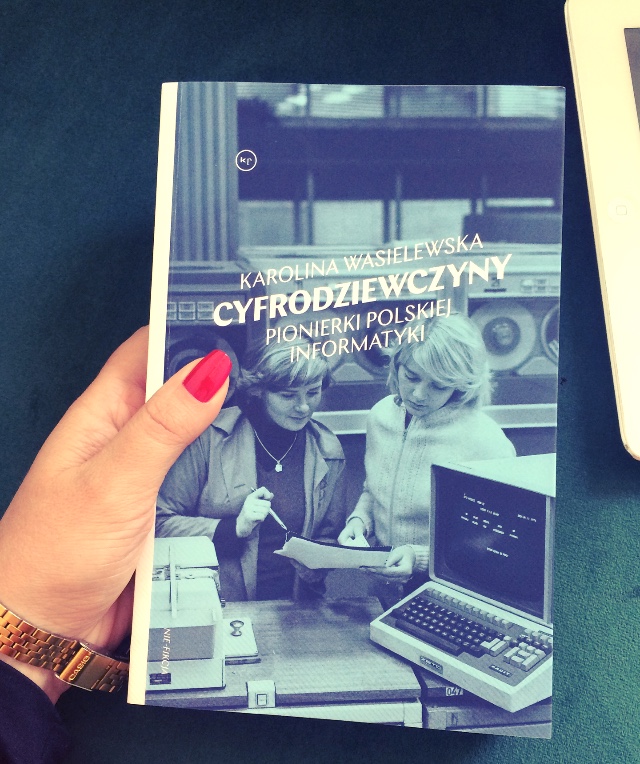
Książka „Cyfrodziewczyny. Pionierki polskiej informatyki”

IMG_4038

Przeczytana jednym tchem.

Gratulacje dla autorki!

Książka „Cyfrodziewczyny. Pionierki polskiej informatyki” to opowieść o kobietach, idealistkach, które marzyły, aby w Polsce czasów PRL-u stworzyć maszyny cyfrowe (komputery), które mogłyby konkurować z tymi produkowanymi na Zachodzie. Osiągnięcie tego celu było wyjątkowo trudne, gdyż w czasach PRL-u dostęp do wszelkich zachodnich innowacyjnych rozwiązań był niemożliwy ze względu na politykę władz oraz nałożone przez USA embargo. Pomimo tego one poświęcały swój czas na tak słabo opłacaną, aczkolwiek, prestiżową pracę.

Już wcześniej interesowałam się historią wrocławskich Zakładów Elektronicznych ELWRO i wyprodukowaną tam serią komputerów Odra, ale nigdy nie udało mi się dotrzeć do tak ciekawych informacji. Ukłony dla autorki za wykonaną pracę i cieszę, że historie polskich programistek Jowity Koncewicz, Krystyny Pomaski czy Wandy Rutkiewicz (w wolnej chwili zdobywającej najwyższe szczyty górskie świata) nie zostaną zapomniane.

#PolskaInformatyka #Cyfrodziewczyny #GirlsGoneTech