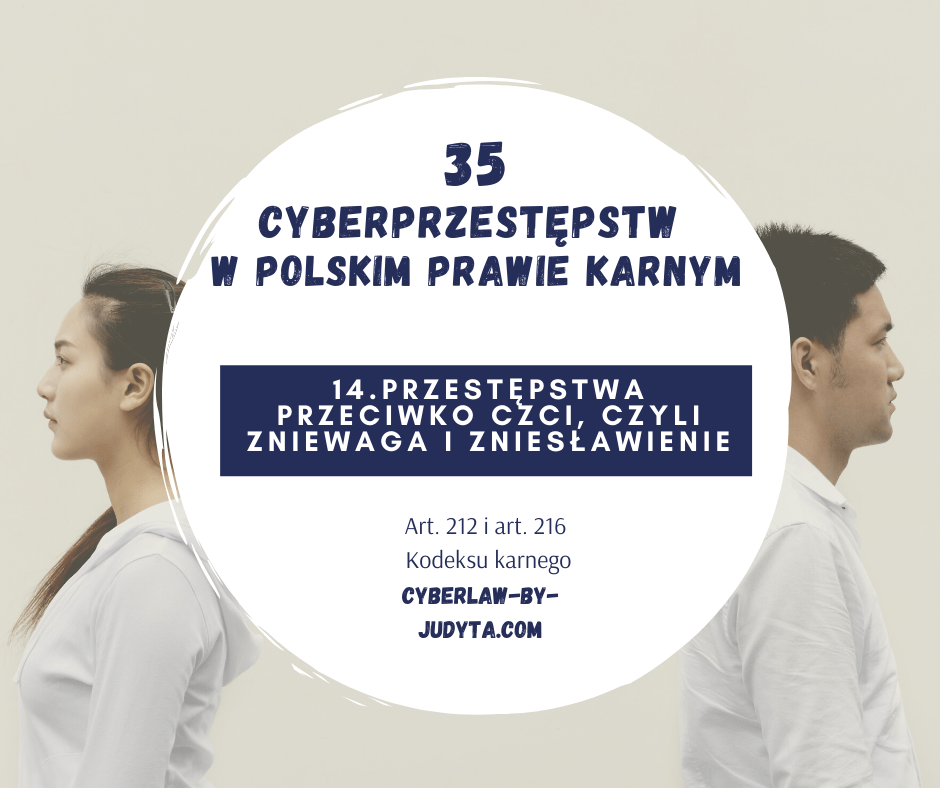
Offenses Against Honor: Insult and Defamation on the Internet (Art. 212 and Art. 216 of the Penal Code)
In today’s digital world, where social media platforms and online forums are often the place for people to freely express their opinions, the issue of protecting one’s honor and reputation has become more important than ever. The anonymity and the vast reach of the internet often lead to situations where individuals face insult or defamation. These offenses, while not physical in nature, can have a significant impact on a person’s life, emotions, and even their professional career. In Poland, such cases are regulated by articles 212 and 216 of the Penal Code. But what exactly do these offenses entail, and how can one protect their dignity in the digital age?
What Are Offenses Against Honor?
Offenses against honor generally refer to any actions that intentionally harm someone’s reputation or dignity. In Polish law, these offenses fall into two categories: insult (zniewaga) and defamation (zniesławienie). The main difference lies in the nature of the act—insult refers to offensive remarks or actions that degrade a person, while defamation involves spreading false information that harms someone’s reputation.
Insult (Art. 216 of the Penal Code)
According to article 216 of the Penal Code, insult refers to any act or speech that publicly lowers someone’s dignity, which may lead to feelings of humiliation or disgrace. This can happen through offensive language, gestures, or actions.
In the context of the internet, insult is often seen in the form of:
- Hate speech: Using offensive language to attack an individual or group based on their race, gender, religion, or other personal characteristics.
- Cyberbullying: Targeting an individual with hostile, aggressive, or belittling messages on social media platforms.
- Name-calling: Publicly insulting someone with degrading terms, slurs, or derogatory language.
Although insults can be harmful, they are generally treated with a bit more tolerance under Polish law compared to defamation, unless the insult reaches a level that severely affects the person’s social or professional life.
Defamation (Art. 212 of the Penal Code)
Defamation, as defined by article 212 of the Penal Code, is the act of publicly spreading false information that harms someone’s reputation. This crime is particularly serious because it involves spreading lies about an individual, causing damage to their reputation in the eyes of the public or a specific group. Defamation can occur through various mediums, including speech, written statements, and, of course, the internet.
In online spaces, defamation typically appears in the form of:
- False accusations: Claiming that someone has committed a crime, engaged in unethical behavior, or has a problematic personal trait, with no factual basis.
- Fake reviews: Posting false reviews or comments on social media or business platforms, intentionally damaging the reputation of a person or company.
- Misinformation: Creating or sharing misleading or false information about an individual with the intent to harm their reputation.
Since defamation involves falsifying information, it can be especially damaging, often leading to severe consequences, such as loss of employment, social exclusion, or legal and financial repercussions.
Legal Consequences of Insult and Defamation
Both insult and defamation are criminal offenses under Polish law, but they are treated differently in terms of penalties:
- Insult (Art. 216 k.k.): The penalty for insult can range from a fine, through restriction of liberty, to a prison sentence of up to one year. If the insult was committed publicly, the penalty may be more severe.
- Defamation (Art. 212 k.k.): Defamation is considered a more serious offense. The punishment for defamation can range from a fine to up to one year in prison. If the defamation is committed through mass communication (including the internet), the penalty can be harsher, particularly if the damage to the victim’s reputation is significant.
Moreover, in cases of defamation, the victim may also file for civil compensation for the damages caused by the defamatory statements.
How Can You Protect Yourself from Insult and Defamation Online?
While it’s important to understand the legal consequences of insulting or defaming someone online, it’s equally important to know how to protect yourself from becoming a victim of these crimes.
- Know your rights: Understanding the laws regarding insult and defamation in your country can help you better protect your reputation. If you feel that your honor has been attacked, you have the right to seek legal protection.
- Gather evidence: If you become the target of online insult or defamation, make sure to save all relevant messages, screenshots, or posts that can serve as evidence of the offense.
- Report offensive content: Many social media platforms and websites have reporting tools that allow users to flag offensive or defamatory content. Take advantage of these to protect yourself.
- Legal action: In cases of serious defamation or insult, you may decide to take legal action by filing a lawsuit. Seek professional legal advice to determine the best course of action.
- Maintain privacy settings: Protect your online identity by adjusting your privacy settings on social media platforms, limiting access to your personal information.
Conclusion
The rise of digital communication and social media has opened new possibilities for self-expression, but it has also created new avenues for harmful actions like insult and defamation. In Poland, the legal framework is in place to protect individuals from such offenses, with articles 212 and 216 of the Penal Code addressing the issue of offenses against honor. Whether you are a victim or a perpetrator, understanding the seriousness of these offenses and the legal consequences they carry is crucial.
Being mindful of how we communicate online, practicing respect for others, and recognizing the power of words can go a long way in fostering a safer and more responsible digital environment for everyone.
As of: March 1, 2022
 Cyberlaw by Judyta